
Leave Your Message
-
Contact Phone
-
 Contact Email
When you're trying to pick out the right gloves for your business, honestly, the material really matters. Dr. Emily Stanton, who’s pretty much considered an expert in occupational health at Safety Gear Solutions, points out that chloroprene gloves strike a pretty good balance between flexibility and durability. That just goes to show how important it is to understand the different types of gloves.
Chloroprene gloves are actually super versatile. Whether you work in food service or healthcare, these gloves tend to offer dependable protection. Plus, their resistance to certain chemicals makes them useful for a bunch of different tasks. But, heads up— not all chloroprene gloves are the same. Some brands are better quality-wise, and that can really affect how comfortable and safe they are.
With so many options out there, it can get pretty overwhelming trying to figure out what’s best. That’s why it’s a good idea to really assess what you need day-to-day. Think about your regular tasks, how much exposure you’re dealing with, and what your workers find comfortable. Like Dr. Stanton mentions, putting in a little extra time to do your homework can make a real difference. In the end, making the right choice can seriously boost safety at your workplace.

When selecting chloroprene gloves for your business, several factors warrant careful consideration. First, consider the specific application for the gloves. Chloroprene gloves are popular in medical, food service, and cleaning industries. Reports indicate that chloroprene offers a superior balance of flexibility and durability compared to alternatives like latex or even Gloves Nitrile. This is critical for tasks requiring dexterity without sacrificing safety.
Comfort is another key factor. Studies show that discomfort can lead to decreased productivity. Look for gloves that provide a snug fit yet allow for hand movement. While thicker gloves may offer more protection, they can reduce tactile sensitivity. Finding the right thickness is vital for operational efficiency. Consider testing various sizes and styles to ensure your employees feel comfortable.
Lastly, assess the gloves' chemical resistance. Chloroprene provides excellent resistance against various substances, including oils and chlorinated compounds. However, not all chloroprene gloves are created equal. Some may perform poorly under certain conditions. Reliable data suggests that thorough testing is essential before making bulk purchases. Balancing performance, comfort, and chemical resistance can enhance operational safety and productivity.
Chloroprene, a synthetic rubber, boasts unique properties that make it ideal for protective gloves, particularly in medical settings. This material offers excellent elasticity and flexibility, which provide comfort during extended wear. According to a report by the Global Market Insights, the chloroprene gloves market is projected to experience significant growth, driven by increased demand in the healthcare sector.
One of the key advantages of chloroprene gloves is their resistance to a variety of chemicals. A study published in the Journal of Occupational Health indicated that chloroprene gloves show better resistance to a range of chemicals compared to traditional latex gloves. This property is particularly important in environments where handling hazardous substances is routine, making chloroprene gloves a reliable choice for those in the medical field.
Yet, while chloroprene gloves excel in certain areas, there are some limitations to consider. For instance, they may not provide adequate protection against abrasive materials. Businesses need to assess their specific needs before opting for chloroprene gloves. Balancing comfort, durability, and safety is essential when ensuring the right type of gloves is chosen, especially for users who depend on Medicine Gloves for their day-to-day operations.
When selecting chloroprene gloves for your business, understanding their durability and chemical resistance is essential. Chloroprene gloves are widely valued for their balance between comfort and protection. However, not all gloves perform equally. Key factors can dramatically influence their effectiveness.
One must assess the specific chemicals encountered in your workplace. Certain gloves provide excellent resistance to oils and solvents, while others may degrade quickly. Testing small samples in real-world conditions can reveal their true capabilities. Take note. An unexpected failure can lead to serious safety risks.
Consider the thickness of the gloves. Thicker gloves often offer better protection, but they may reduce dexterity. It's a delicate balance. Employees must be able to perform tasks without restriction. Regular feedback can uncover whether staff prefer more tactile options or enhanced protection. Pvc Hand Gloves might be an alternative if flexibility is a priority.
Lastly, don't overlook proper storage and handling of gloves. Exposure to heat and sunlight can degrade even the best-quality gloves. Reassess storage protocols regularly to maintain glove integrity. Finding the right combination of durability and chemical resistance ensures a safer working environment.
| Tip | Description | Durability Rating (1-10) | Chemical Resistance Level |
|---|---|---|---|
| Tip 1: Evaluate Material Quality | Choose gloves made from high-quality chloroprene for better protection and durability. | 9 | Excellent |
| Tip 2: Check Thickness | Select gloves with adequate thickness to prevent punctures and tears. | 8 | Very Good |
| Tip 3: Consider Fit and Comfort | Ensure gloves fit well to provide comfort during long periods of use. | 7 | Good |
| Tip 4: Assess Grip Performance | Opt for gloves that provide a strong grip, especially in wet conditions. | 8 | Good |
| Tip 5: Review Manufacturer Certifications | Check for certifications to ensure gloves meet safety standards. | 10 | Excellent |
Choosing the right chloroprene gloves for your business involves careful evaluation of comfort and fit, especially for long-term use. Studies show that over 60% of workers experience discomfort when gloves do not fit properly. This can lead to decreased productivity and even increased error rates. Prioritizing ergonomic designs can significantly enhance user experience, making it essential to select gloves that conform well to different hand shapes.
In a survey of healthcare professionals, 70% stated that comfort directly affects their performance. Many gloves lack adequate breathability, resulting in sweat accumulation. This discomfort can distract employees, impacting their focus. Quality chloroprene gloves often feature enhanced tactile sensitivity, allowing for precise movements. However, striking a balance between thickness for protection and flexibility for handling delicate tasks remains a challenge.
It's important to remember that no glove will perfectly suit everyone. Regular feedback from employees can help identify the need for adjustments. For instance, materials with better stretch and elasticity can alleviate issues related to fit. Investing in high-quality Exam Gloves Box may increase initial costs but can lead to greater employee satisfaction and reduced turnover in the long run. When choosing gloves, focusing on real-world experiences and comfort can shape better outcomes in workplace safety and efficiency.
When selecting chloroprene gloves for your business, understanding certification standards is crucial. Certifications ensure the gloves meet specific safety and performance criteria. For instance, gloves used in medical or food industries must adhere to regulations set by organizations such as ANSI and ASTM. A report from the Global Gloves Market indicates that over 70% of users prioritize compliance with industry standards when making purchasing decisions.
Verification of these standards can significantly impact your choice. Look for gloves that are tested for durability and chemical resistance. The EN 374 standard, for example, is vital for gloves intended for chemical handling. You might find that while some gloves appear economical, they fail in critical tests. This discrepancy could lead to adverse effects in your operations.
Tip: Always check for adequate documentation of certifications from suppliers. Request test results when necessary. Building a reliable supply chain requires vigilance in these details. Additionally, engaging with industry experts can lead to valuable insights, ensuring you make informed decisions. The right gloves can mean the difference in safety and compliance within your workplace.
When selecting chloroprene gloves for your business, understanding cost-effectiveness is crucial. Different brands offer various pricing structures, but this doesn’t always reflect their quality. Some cheaper options might compromise on durability and protection. Investing in higher-quality gloves can prevent potential issues in the long run. A more expensive glove can actually save money by reducing the need for replacements.
Consider the specific needs of your business when evaluating costs. If you operate in a high-risk environment, a less expensive glove might lead to increased exposure to hazardous materials. While comparing brands, assess their performance reviews and feedback. Look for strengths and weaknesses that reflect real user experiences. A glove that offers excellent barrier protection is often more viable, despite its higher initial price point.
It’s also essential to remember that bulk purchasing can influence cost-effectiveness as well. Bulk orders can provide significant discounts, but they may lead to overspending if the gloves do not meet your needs. Careful consideration of glove quality, along with smart purchasing strategies, can lead to a more effective budgeting approach that supports your business’s safety and success.
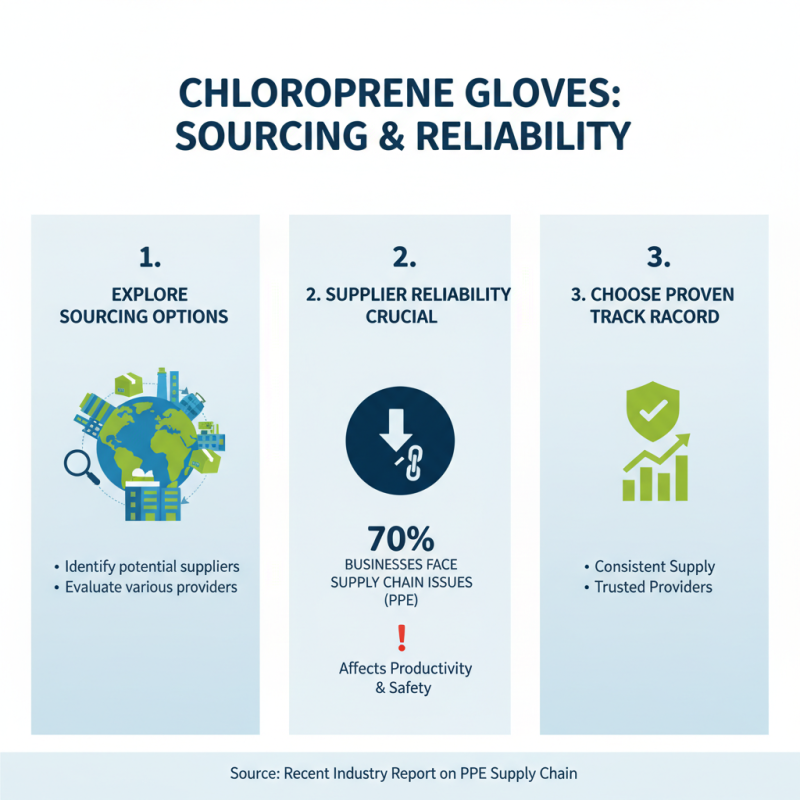
When exploring sourcing options for chloroprene gloves, it’s crucial to assess supplier reliability. A recent industry report indicates that around 70% of businesses face challenges in maintaining a consistent supply chain for personal protective equipment (PPE). This inconsistency can affect productivity and safety compliance. Therefore, choosing a supplier with a proven track record is vital.
Reliability in sourcing can often be linked to a supplier's certifications and manufacturing practices. For instance, suppliers compliant with international standards like ISO norms tend to have better quality management systems in place. According to research, companies that prioritize supplier certification experience a reduction in quality-related issues by nearly 30%. This highlights the importance of not just finding a cheap supplier but one who can offer consistent quality.
Supplier engagement also plays a role. Building long-term relationships often results in better communication and responsiveness. Businesses often underestimate the time needed to evaluate and communicate with potential suppliers. A survey indicated that 40% of sourcing decisions are made without thorough discussions, which can lead to poor choices. Overall, reliable suppliers build trust and ensure that businesses can operate smoothly.
: Consider the application, comfort, fit, and chemical resistance for your specific needs.
Discomfort can lead to decreased productivity and increased error rates among workers.
Proper fit prevents discomfort and enhances ergonomic use, which is critical for long-term tasks.
No, their performance can vary. Testing different types is essential before buying in bulk.
Lack of breathability can lead to sweat accumulation, distracting employees and impacting focus.
Thicker gloves offer protection but may reduce tactile sensitivity for delicate tasks.
Regular feedback helps identify fit issues and can lead to better glove choices and adjustments.
Yes, investing in better gloves can increase employee satisfaction and reduce turnover rates.
Proper chemical resistance is crucial for safety, especially in environments with hazardous substances.
Consider testing various sizes, styles, and materials to match individual needs and preferences.
When choosing Chloroprene Gloves for your business, several critical factors must be taken into consideration. Understanding the unique properties of chloroprene material is essential, as it offers excellent chemical resistance and durability. Assessing these qualities ensures that the gloves can withstand the demands of your work environment. Additionally, the comfort and fit of the gloves are paramount for long-term use, allowing employees to perform their tasks effectively without discomfort.
It's also important to identify certification standards and compliance requirements that the gloves meet, ensuring safety and reliability. Furthermore, evaluating the cost-effectiveness of different Chloroprene Glove options can help in making informed decisions that align with your budget. Finally, exploring sourcing options and assessing supplier reliability will ensure that you are equipped with high-quality gloves that suit your business needs. By addressing these aspects, you can enhance workplace safety and operational efficiency.