
Leave Your Message
-
Contact Phone
-
 Contact Email
Lately, we've been seeing a real jump in demand for Chloroprene Gloves. More folks are becoming aware of the importance of hygiene and safety across various industries, and that’s clearly driving the interest. According to a report from Grand View Research, the global market for these gloves is actually expected to grow at about 5.7% each year from 2022 all the way through 2030. That’s a pretty solid indicator that the trend toward better, more reliable PPE is only getting stronger.
Dr. Emily Turner, who’s pretty much an expert in protective gear, mentioned that “Chloroprene Gloves not only give you great dexterity but also handle chemicals really well.” It’s a point that really hits home — we’re all looking for gloves that are tough, dependable, and meet different safety standards. But here’s the thing: with so many manufacturers out there, choosing the right supplier can be kinda tricky. Quality varies, prices differ, and not everyone sticks strictly to safety regulations.
As the market keeps changing and growing, it’s super important for buyers to do their homework. Plenty of companies claim they’ve got the best Chloroprene Gloves, but the reality is, not all gloves are created equal in terms of how well they perform or how durable they are. It really pays to check out reviews and reputation before you decide. The bottom line? Making an informed choice can mean safer work environments and better protection all around, no matter where you are in the world.

When selecting wholesale OEM chloroprene gloves, it’s essential to consider the specific needs of your industry. Recent reports indicate that the global market for chloroprene gloves is expected to grow at a compound annual growth rate (CAGR) of around 6.5% by 2027. This growth reflects the increasing demand across various sectors, including healthcare, food processing, and manufacturing.
Chloroprene gloves are preferred for their flexibility and durability. They offer excellent resistance to punctures and chemicals, making them suitable for professionals. A survey revealed that about 70% of health professionals favor chloroprene over latex gloves due to allergy concerns. Their non-latex nature prevents allergic reactions, a critical factor for many users.
Despite their advantages, not all chloroprene gloves are created equally. Variability in thickness and quality can lead to unexpected failures. Some suppliers may offer lower-priced products that might not meet stringent safety standards. Regular testing and certification are vital to guarantee the gloves' performance. Investing in quality ensures protection and enhances productivity in the workplace.
Chloroprene gloves are increasingly popular in various industries. These gloves are made from a synthetic rubber, offering a unique blend of stretch and resilience. The material is particularly notable for its resistance to heat, oils, and chemicals. This makes chloroprene a reliable choice for tasks requiring dexterity and protection.
One significant benefit of chloroprene gloves is their comfort. Unlike traditional rubber, chloroprene provides a soft feel against the skin. Users often report reduced hand fatigue during prolonged use. This comfort can lead to increased productivity. However, not all chloroprene products are created equal. Variability in quality can occur, underscoring the importance of selecting reliable sources.
While chloroprene gloves are excellent, they still come with limitations. Some users may find them less effective compared to Gloves Nitrile in certain situations. Price can also vary greatly across different suppliers. It’s essential to thoroughly evaluate what best suits your needs. Balancing comfort, durability, and cost is crucial for making the right choice.
Chloroprene gloves have gained significant traction in various industries in 2023. Healthcare professionals and food handlers are increasingly relying on these gloves for their superb barrier protection and flexibility. The rising awareness about hygiene and infection control has driven this demand. Many organizations now prioritize the use of high-quality protective gear to safeguard both employees and customers.
In recent months, we have also observed a shift in consumer preferences towards sustainable materials. Manufacturers are beginning to explore eco-friendly options while maintaining glove performance. This trend indicates a growing responsibility among businesses to reduce environmental impact. As a result, the production of chloroprene gloves may evolve, leading to greener alternatives in the market.
Despite the positive trends, challenges remain. Price fluctuations in raw materials can affect production costs. Some manufacturers are struggling to meet the increasing demand while maintaining quality standards. Balancing affordability with performance continues to be a topic of debate within the industry. Uncertainty in supply chains further complicates the market landscape, prompting businesses to reassess their strategies. Such factors contribute to a dynamic yet challenging environment for chloroprene glove production in 2023.
The Chinese chloroprene gloves industry has seen significant growth. Various manufacturers play crucial roles in this market. They emphasize quality and reliability. Some focus on innovative production methods, enhancing product performance. Others prioritize sustainable practices, aligning with global environmental goals.
Key players in the industry possess extensive expertise. They invest in advanced technologies to improve glove durability and comfort. This ensures enhanced user experience. However, the competition is fierce. Not all manufacturers maintain consistent quality standards. Some may compromise on materials to cut costs. This inconsistency can pose challenges for buyers.
Understanding the market landscape is essential. Importers should conduct thorough research before making purchases. Evaluating suppliers’ certifications and production processes is critical. Many manufacturers showcase their commitment to quality assurance. Still, prospective buyers should remain vigilant. This helps in securing reliable sources for chloroprene gloves.
| Manufacturer Country | Annual Production (Million Pairs) | Certifications | Main Market | Price Range (USD per Pair) |
|---|---|---|---|---|
| China | 50 | ISO 9001, CE | North America, Europe | 0.50 - 1.00 |
| Vietnam | 30 | FDA, EN 374 | Asia, Africa | 0.60 - 1.20 |
| Malaysia | 40 | ISO 13485, CE | Europe, US | 0.55 - 1.15 |
| Thailand | 20 | ISO 9001, FDA | Middle East, Europe | 0.70 - 1.10 |
| Indonesia | 25 | CE, ANSI | Australia, Asia | 0.45 - 0.95 |
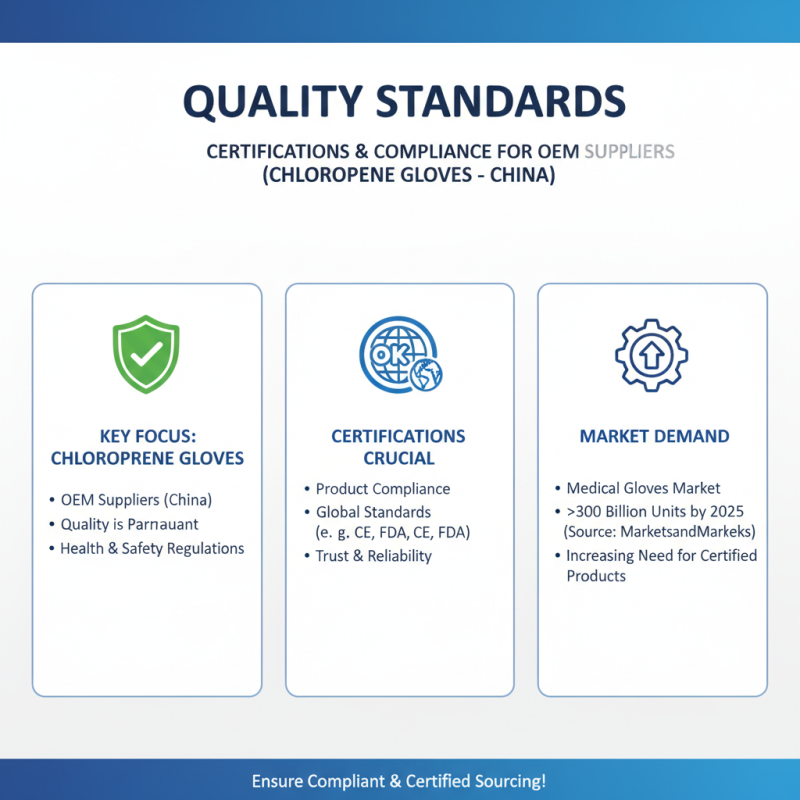
When sourcing chloroprene gloves from OEM suppliers in China, quality standards are paramount. Certifications play a crucial role in ensuring that products meet specific health and safety regulations. According to a report by MarketsandMarkets, the global demand for medical gloves is expected to surpass 300 billion units by 2025. This highlights the increasing need for compliant and certified products in the market.
Manufacturers often obtain certifications like ISO 13485 and CE marking, which signify adherence to quality management systems and safety requirements in Europe, respectively. While many suppliers claim compliance, it's essential to verify these certifications. Not all manufacturers may maintain consistent production quality. Some may overlook necessary details, leading to potential risks.
Tip: Always request documentation for certifications and inspect product samples before larger orders.
In the chloroprene glove sector, consistency in quality can vary greatly among suppliers. A recent study indicated that nearly 20% of materials utilized did not meet industry benchmarks. It is vital to choose OEM partners who prioritize thorough testing.
Tip: Engage suppliers in discussions about their quality assurance processes. This can provide insight into their commitment to excellence in Manufacturing Gloves.
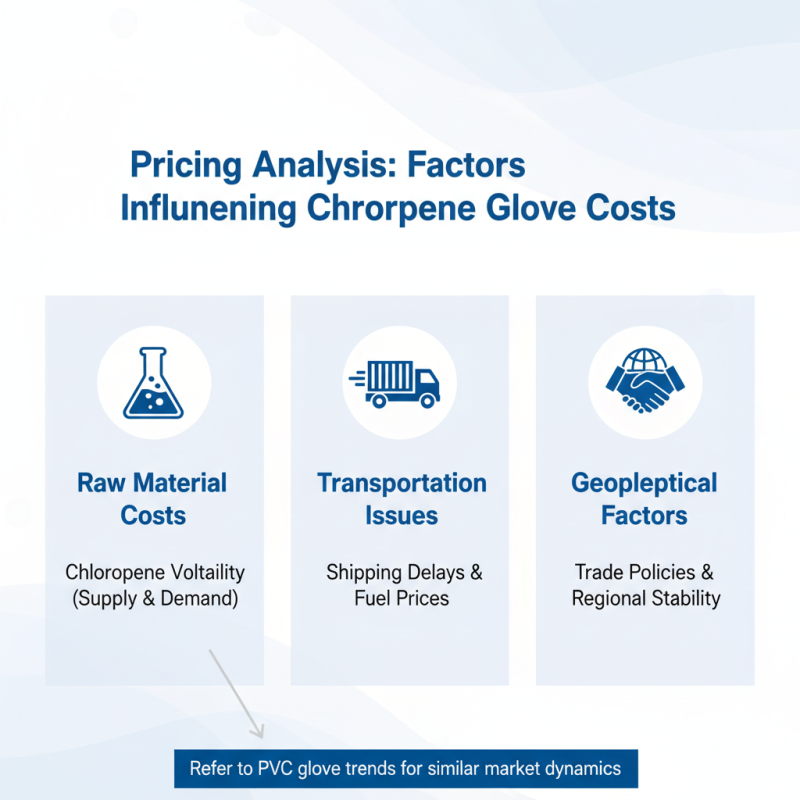
The pricing of chloroprene gloves is influenced by several key factors. One of the primary aspects is the raw material costs. Data from market research indicates that chloroprene, similar to the pricing trends of Pvc Hand Gloves, displays volatility based on supply chain dynamics. Transportation issues and geopolitical factors can drive prices up unexpectedly.
Manufacturers also face challenges in production costs. Labor expenses and factory overheads significantly affect the final price. Reports suggest that these costs could account for up to 30% of the total price of chloroprene gloves. Moreover, quality control measures add another layer of cost. Companies must invest in rigorous testing to ensure safety and compliance with industry standards.
Market demand plays a crucial role too. During health crises, the demand surges, leading to higher prices. A recent industry report noted that prices for chloroprene gloves soared by as much as 40% in 2020. Understanding this fluctuating landscape can help buyers make informed decisions. Balancing budget constraints with quality is essential for sourcing effective hand protection.
When selecting OEM chloroprene gloves, consider your specific needs. The thickness of the gloves plays a crucial role. Thicker gloves offer more protection but may compromise dexterity. Conversely, thinner gloves provide better sensitivity, ideal for detailed tasks.
Consider the fit and comfort level. Gloves that are too tight can lead to hand fatigue. On the other hand, loose gloves can decrease control. Take time to try different sizes and styles. This fit test can help you find the perfect pair.
Tips for choosing the right gloves include verifying certifications. Look for gloves that meet safety and quality standards. Additionally, consider purchasing an Exam Gloves Box for easy storage. This keeps your gloves organized and accessible. Reflect on your specific needs; not all situations require the same type of glove.
: Focus on manufacturers’ certifications and production processes. Conduct thorough research to ensure reliability.
Certifications like ISO 13485 and CE marking signify adherence to quality and safety standards. Verify them carefully.
Pricing depends on raw material costs, labor expenses, and market demand. These elements fluctuate frequently.
Inspecting samples helps verify quality and consistency. This step is crucial to avoid potential risks.
No, quality can vary greatly. Some manufacturers may cut corners to reduce costs, affecting overall reliability.
Demand is expected to surpass 300 billion units by 2025, indicating a growing need for compliant products.
During health crises, demand surges significantly, which can lead to prices rising by as much as 40%.
Engage the supplier in a discussion about their quality assurance processes for clarification and transparency.
The article "Top 10 Wholesale OEM Chloroprene Gloves in China for Your Needs" provides a comprehensive overview of chloroprene gloves, highlighting their material properties and benefits, which include excellent elasticity, durability, and chemical resistance. As demand for these gloves increases in 2023, the market trends reveal a significant rise in usage across various industries.
The article also discusses key manufacturers within the Chinese chloroprene gloves industry, emphasizing the importance of quality standards and compliance for OEM suppliers. Additionally, readers will find insights into pricing factors affecting chloroprene gloves and a buying guide to assist in selecting the most suitable options for their specific needs. This resource serves as a valuable tool for anyone looking to understand the chloroprene gloves market and make informed purchasing decisions.